Who Is Lucifer?
The morning star, the Babylonian king, and the devil assembled afterward
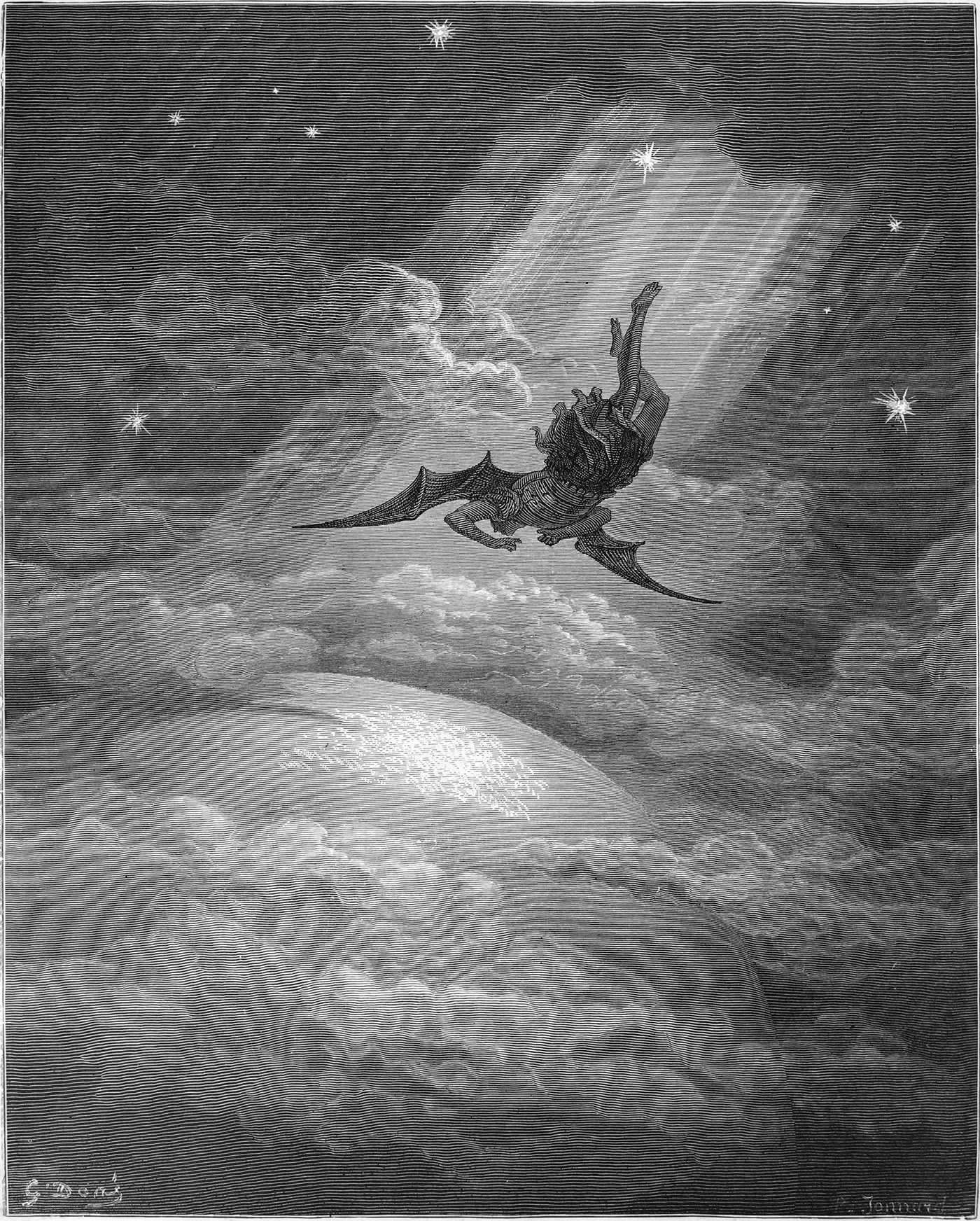
One verse in the King James Bible carries the name Lucifer. The verse is part of a taunt song aimed at a king of Babylon, and the name itself is a Latin word for the morning star. The fallen angel, the war in heaven, the king of hell — all of that was attached afterward, piece by piece, over roughly two thousand years. The pieces can be dated. The sources can be opened. This article walks the assembly in order.
The taunt
Isaiah 14 announces its target in its own introduction: "You will take up this taunt against the king of Babylon" (14:4). The chapter is a funeral song sung early, over a king still standing. It follows him down to Sheol, where the dead kings rise from their thrones to greet him: "You too have become as weak as we" (14:10). The maggots are his bed and the worms his blanket (14:11). Then comes the verse:
"How you are fallen from heaven, O Day Star, son of Dawn! How you are cut down to the ground, you who laid the nations low!" (14:12, ESV)
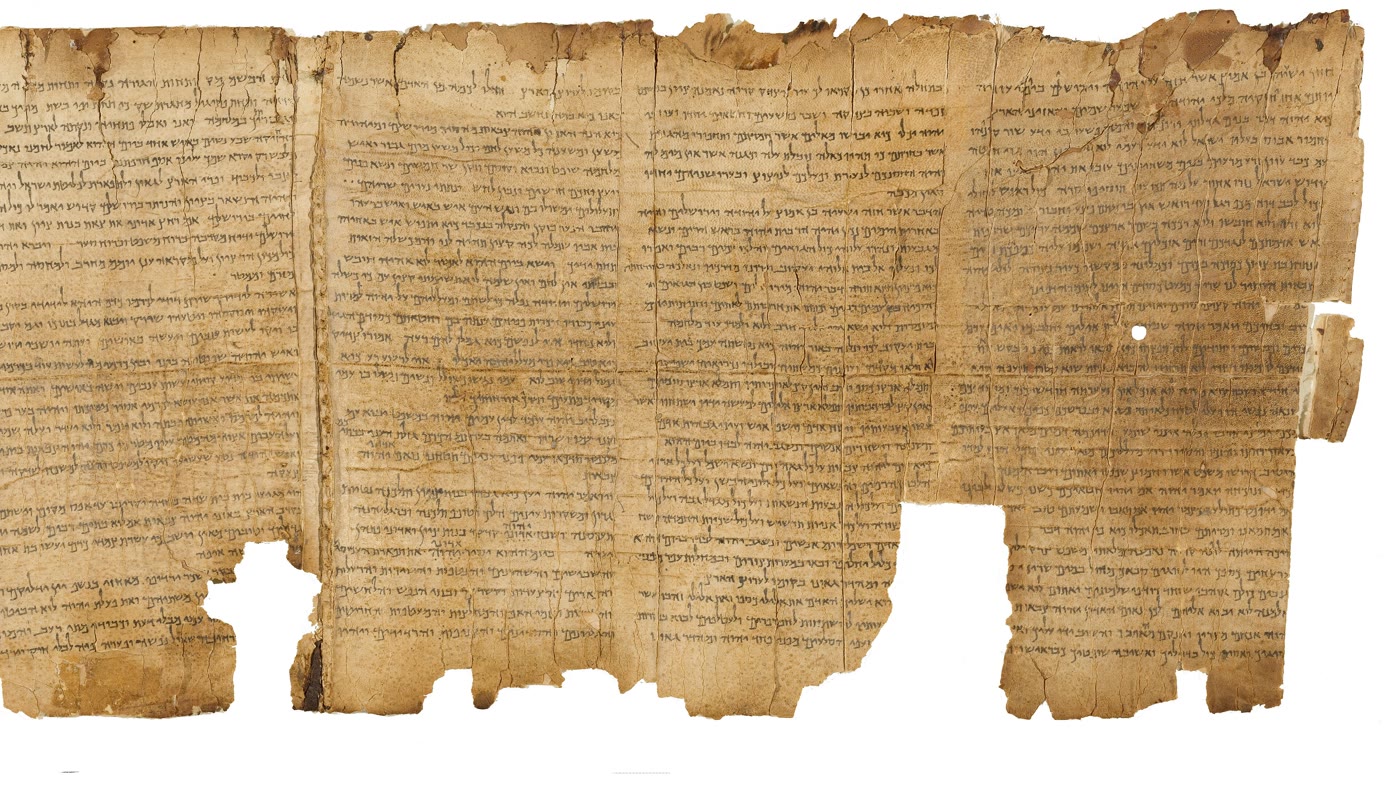
In Hebrew the name is Helel ben Shahar — "Shining One, son of Dawn." It is the morning star, Venus, which climbs higher than every other star in the sky and then vanishes when the sun rises. The taunt is built on the picture: the king who rose highest disappears at daylight. The nations look at the corpse and ask, "Is this the man who made the earth tremble, who shook kingdoms?" (14:16).
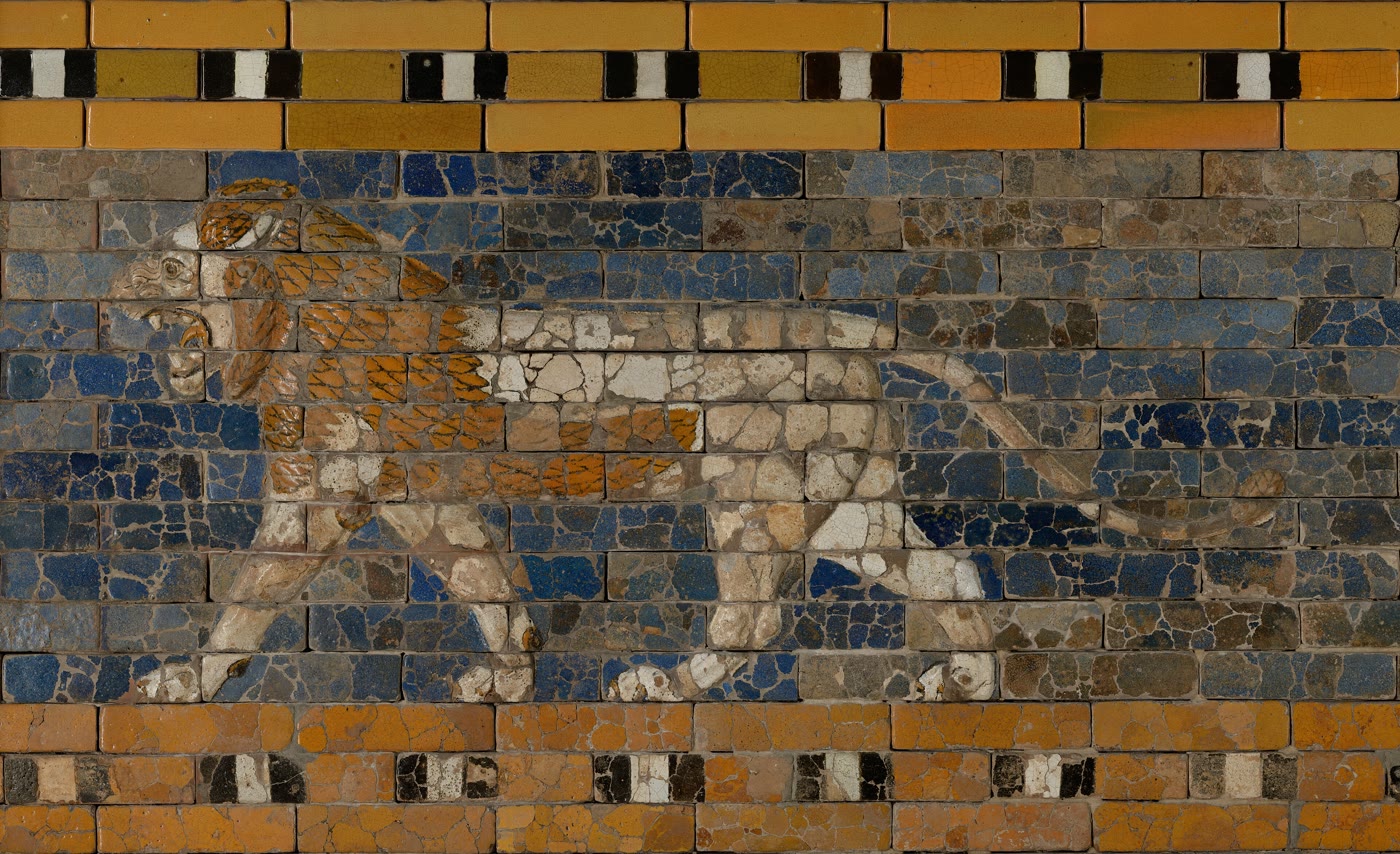
The king is never named. That has not stopped people from guessing, and the guessing is a genuine open question. Nebuchadnezzar II, who destroyed Jerusalem, was the traditional candidate, with Nabonidus, the last Babylonian king, behind him. The strongest recent case is for neither. Shawn Aster (2017) and Stephen L. Cook (2019) argue the taunt fits Sargon II of Assyria, who held the title King of Babylon, died in battle in 705 BCE, and whose body was never recovered — which matches the taunt's ugliest detail, the king "cast out, away from your grave... like a corpse trampled underfoot" (14:19–20). Nebuchadnezzar died in his bed and was buried like a king; Sargon was left on a battlefield. The dating may be layered as well: an older poem against an Assyrian king, carried inside a Babylonian frame set down in the sixth or fifth century BCE. The article takes no side here. What the text settles is narrower and stronger: whoever the king was, the passage is a taunt against a human king, and the name in it is a nickname about the morning star.
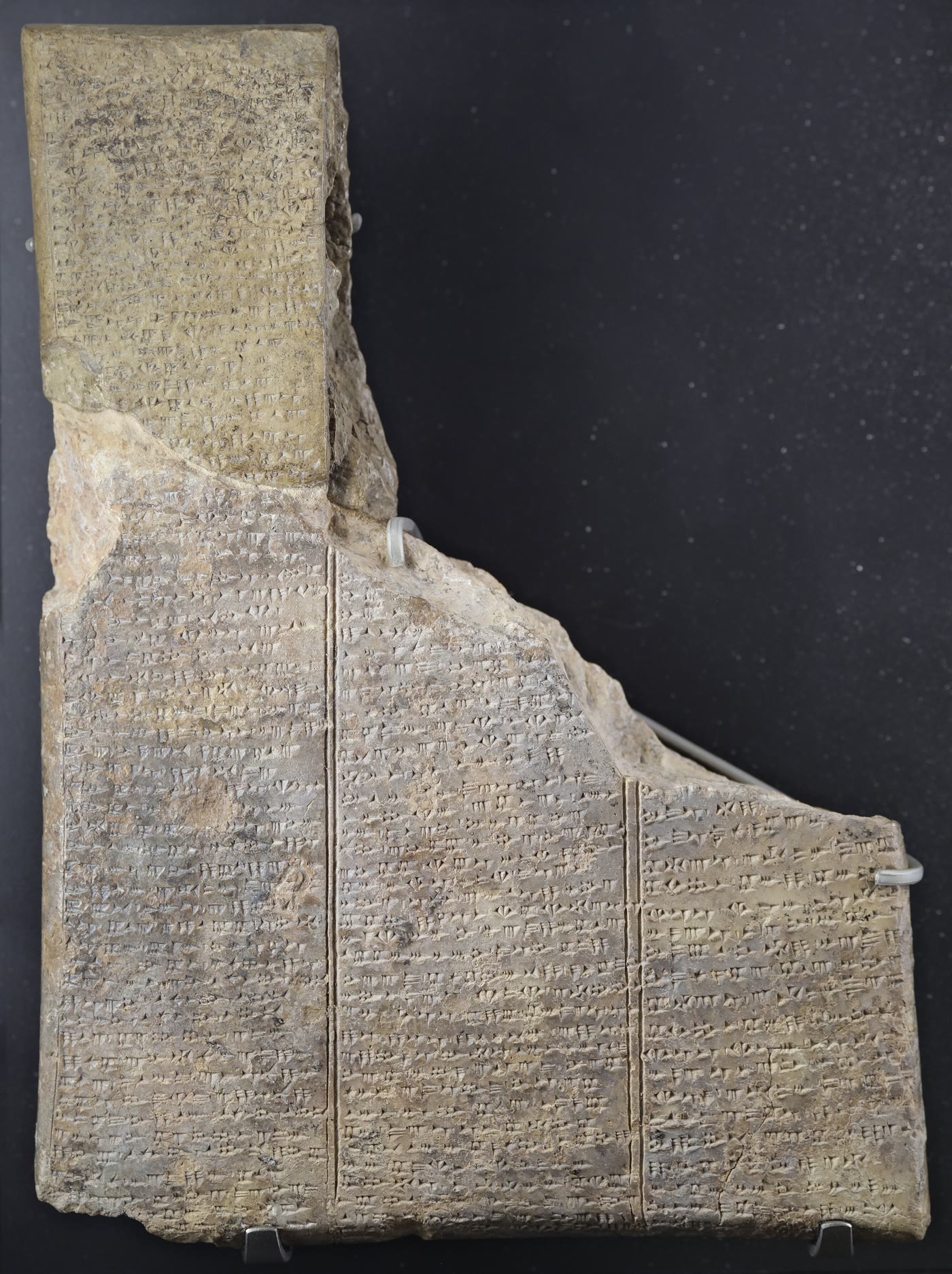
Behind the nickname there is older material, and this part is argued about. Shahar, Dawn, is a god in the Ugaritic tablets from Ras Shamra (13th century BCE), twin of Shalim, Dusk (KTU 1.23). The king's boast in Isaiah — "I will ascend to heaven; above the stars of God I will set my throne on high; I will sit on the mount of assembly in the far reaches of the north" (14:13) — resembles the Ugaritic story of Athtar (KTU 1.6), who tried to occupy Baal's throne on Mount Zaphon. Whether Isaiah is quoting that myth is disputed. Athtar is not cast down in the Ugaritic text; he comes down on his own when his feet cannot reach the footstool, and he rules the earth afterward. Klaas Spronk (1998) and Matthias Albani (2004) argue the parallel is weaker than its reputation, and Nicholas Wyatt (1998) found "no warrant for seeing the present episode as itself a deposition myth." The rival reading takes the passage as a mockery of dead-king worship, which needs no god-myth at all. The dispute is printed here because it belongs here: the Shahar connection is documented, the Athtar connection is a live argument.
A word, not a name
"Lucifer" is Latin. It means light-bearer, and in classical Latin it was the ordinary word for the morning star. Around 400 CE, Jerome translated the Hebrew Bible into Latin — the version called the Vulgate — and rendered Helel as lucifer. He was translating the picture, not naming a devil. The King James translators, working in 1611, kept Jerome's Latin word in this single verse instead of translating it into English. That is the whole reason "Lucifer" stands in the KJV exactly once, and why most modern translations print "Day Star" or "morning star" and the name vanishes.
The word had a respectable career before it had a diabolical one, and the receipts survive:
- Jerome's own Bible uses lucifer for Christ. Second Peter 1:19 in the Vulgate urges believers to hold to the prophetic word "until the day dawns and the morning star — lucifer — rises in your hearts." In Revelation 22:16, Jesus calls himself "the bright morning star."
- The Exsultet, the hymn sung at the Easter Vigil in Catholic churches to this day, addresses the risen Christ as lucifer matutinus — "the morning star that never sets."
- A fourth-century bishop of Cagliari in Sardinia was named Lucifer (he died in 370 or 371). He was a fierce, divisive churchman, never formally canonized, venerated locally in Sardinia. The point is the name, not the halo: a Christian bishop carried the name Lucifer from birth, and even his enemies never threw it at him as the devil's. In his century, it was not.
The weld between the morning star and Satan was made by interpretation. The reading appears early — the Life of Adam and Eve (ch. 15) already has Satan quoting "I will set my throne above the stars of heaven," and 2 Enoch 29 tells a fall story, though that chapter is widely suspected of being a later Christian insertion. Tertullian worked with the identification, and Origen (3rd century) systematized it, reading Isaiah 14 together with Ezekiel 28 — another taunt, against the king of Tyre, which sets its king in Eden as a guardian cherub — and with Jesus' saying in Luke 10:18, "I saw Satan fall like lightning from heaven." Two royal taunts and one saying became one biography. The church writers who built the weld knew the plain sense perfectly well: Jerome and Theodoret both concede in their commentaries that Isaiah's words are aimed at the Babylonian king. The devil's fall was read out of the passage by men who knew it was, on its face, about a king. The name itself hardened later, and in Latin: by the Middle Ages, Lucifer had become a common name for the devil.

So the direction of the popular story is backwards. There was no Babylonian king named Lucifer — the name is Latin, applied as a translation about a thousand years after Babylon fell, and no king list carries it, because no king bore it. A taunt became a biography.
The Accuser
To find where the devil actually comes from, start with the Hebrew Bible's own Satan, because he is not the figure people expect.
He is called ha-satan — the Satan, with the article, the way you would say "the prosecutor." It is a job title. In Job 1–2 he appears among the sons of God when they present themselves before the LORD, reports that he has been patrolling the earth, and proposes the test of Job's faith. He acts only with permission, and he reports back. In Zechariah 3 he stands at the right hand of the high priest Joshua to accuse him, and God overrules the accusation. In Numbers 22 the word is not even a being: the angel of the LORD stands in the road "as a satan" — as an adversary — against Balaam. In the Hebrew Bible, a satan is whoever fills the accuser's slot, and God's own angel can fill it.
There is no king of hell in these texts, no rebel, no war. The prosecutor works in the council, under orders.
The same story, told twice
The growth of the figure can be watched inside the Bible itself, in two chapters that tell the same story.
Second Samuel 24:1, the older telling: "Again the anger of the LORD was kindled against Israel, and he incited David against them, saying, 'Go, number Israel and Judah.'"
First Chronicles 21:1, the later retelling: "Then Satan stood against Israel and incited David to number Israel."
Same census, same verb, same David. In Samuel, God incites him. In Chronicles, written after the exile, the inciter has become Satan — or an adversary. That last point is argued: the Hebrew of Chronicles has śāṭān without the article, and serious commentators divide on what it means. Sara Japhet (1993), Peggy Day (1988), and Gary Knoppers (2004) read it as an indefinite common noun — "an adversary," possibly even a human one — and note it would otherwise be the only proper-name use of Satan in the entire Hebrew Bible. H.G.M. Williamson (1982) and Paul Evans (2004) argue for a celestial adversary, an intermediary between God and the deed. The dispute matters and is printed as a dispute. What survives on every reading is the change itself: between the two tellings, the act that Samuel assigns to God gets reassigned to an adversary figure. The discomfort that produced the devil is visible on the page, between two books of the same Bible.
The assembly years
The devil of popular belief was mostly built in the centuries between the Testaments, roughly 300 BCE to 100 CE, in books that circulated widely and mostly did not enter the Hebrew Bible.
The book of 1 Enoch, in its Book of the Watchers (3rd century BCE; Aramaic fragments of it were found among the Dead Sea Scrolls), expands the strange verses of Genesis 6 into the first full fallen-angels story. Heavenly Watchers descend, take human wives, father giants, and teach forbidden arts. Their leaders are named — Shemihazah and Asael, also called Azazel. For their crimes they are bound in the desert and in the valleys of the earth until the judgment. Note what the original fall story is about: desire and forbidden knowledge. There is no throne grab and no war over heaven. That plot arrives later.
The book of Jubilees names Mastema, chief of the evil spirits, who bargains with God to keep a tenth of the demons under his own command after the flood. At Qumran, the community behind the Dead Sea Scrolls organized the world into the lot of light and the lot of Belial — a word that in the Hebrew Bible is a common noun meaning "worthlessness" and by this period has become a name. The Community Rule's teaching on the two spirits is as dualistic as Judaism gets, and it still holds the line: God created both spirits. The Prince of Darkness is a creature, on a leash, inside a set term. Never a rival god.
Behind all of this sits the Persian question, and it is a real fight. Judah's formative centuries were spent under the Persian Empire, and Zoroastrianism had a true cosmic adversary — Angra Mainyu, with his demons, his assault on a good creation, and a final judgment that burns the evil away. Mary Boyce argued the influence on Judaism was deep and structural. James Barr's 1985 rebuttal is the canonical counter: resemblance is not borrowing, and the Zoroastrian texts were written down so many centuries later that the direction and dating of any loan are hard to prove. Shaul Shaked's middle position — real contact, in a shared world, producing a different system — is where much of the field works now. The article prints the fight as a fight.
One Persian crossing, though, is not in dispute, because it carries its name with it. Asmodeus, the demon who kills Sarah's seven husbands in the book of Tobit, is the Avestan wrath-demon Aeshma. The compound aēšma.daēva is reconstructed rather than attested in the surviving Avesta — the case rests on the Middle Persian form Xēšm Dēw and on Tobit's Iranian coloring — but the derivation is accepted across the argument, and Barr himself used it as his example of a genuine, particular contact. At least one Persian demon crossed the border with his name on him.
The rest of the name-pile has the same kind of paper trail. Azazel, who receives the scapegoat in Leviticus 16, is a wilderness power before 1 Enoch promotes him to a chief of the Watchers. Beelzebub is Baal-zebub, the god of Ekron whose oracle King Ahaziah consults in 2 Kings 1; the Greek form Beelzeboul probably preserves an older title, Baal-zebul, "Baal the Prince," with "lord of the flies" standing as a mocking pun on it; by the Gospels he is "prince of demons" (Matthew 12:24). The shedim of Deuteronomy 32:17, the goat-spirits of the desert, and the night creature Lilith of Isaiah 34:14 are the Hebrew Bible's own minor demons. Lilith has exactly one verse, in a ruined desert, among the owls. Her career as Adam's first wife begins in the medieval Alphabet of Ben Sira, some fifteen centuries later.
The weld
The Greek language did the joining. The Septuagint, the Greek translation of the Hebrew Bible, rendered ha-satan as ho diabolos — the Slanderer, the Accuser. The New Testament uses both Satanas, the Hebrew title carried over letter by letter, and diabolos. "Devil" is diabolos arriving in English by way of Latin diabolus and Old English deofol. Satan and Devil are the same office in two languages: the Hebrew word for the prosecutor, and its Greek translation.
The serpent took longest to join. In Genesis 3 the serpent is a creature — "more crafty than any other beast of the field" — and he is cursed as a creature, on his belly, eating dust. Genesis never calls him Satan, and no other book of the Hebrew Bible does either. The earliest surviving hint that Eden's tempter was the devil is the Wisdom of Solomon 2:24 (around the turn of the era): "Through the devil's envy death entered the world." Even that is a hint, not an identification — the verse names no serpent, no Eden, no Adam, and a documented rival reading takes the envy to be Cain's, since Wisdom itself makes Cain its envy-murderer (10:3) and the early Christian letter 1 Clement quotes the verse wrapped around the story of Cain and Abel. Michael Stone's survey stands: apart from Wisdom, and possibly the Life of Adam and Eve — whose Jewish provenance is itself contested — no pre-Rabbinic Jewish source identifies Satan with the serpent.
The explicit weld is Revelation 12:9: "And the great dragon was thrown down, that ancient serpent, who is called the Devil and Satan, the deceiver of the whole world." Serpent, dragon, Devil, Satan — one being, named as one being, for the first time beyond dispute. The same passage gives him his war in heaven (12:7–9), fought against Michael. Later tradition took that war, carried it back to Isaiah 14, and read the Babylonian king's taunt as the war's report. The taunt is centuries older than the weld.
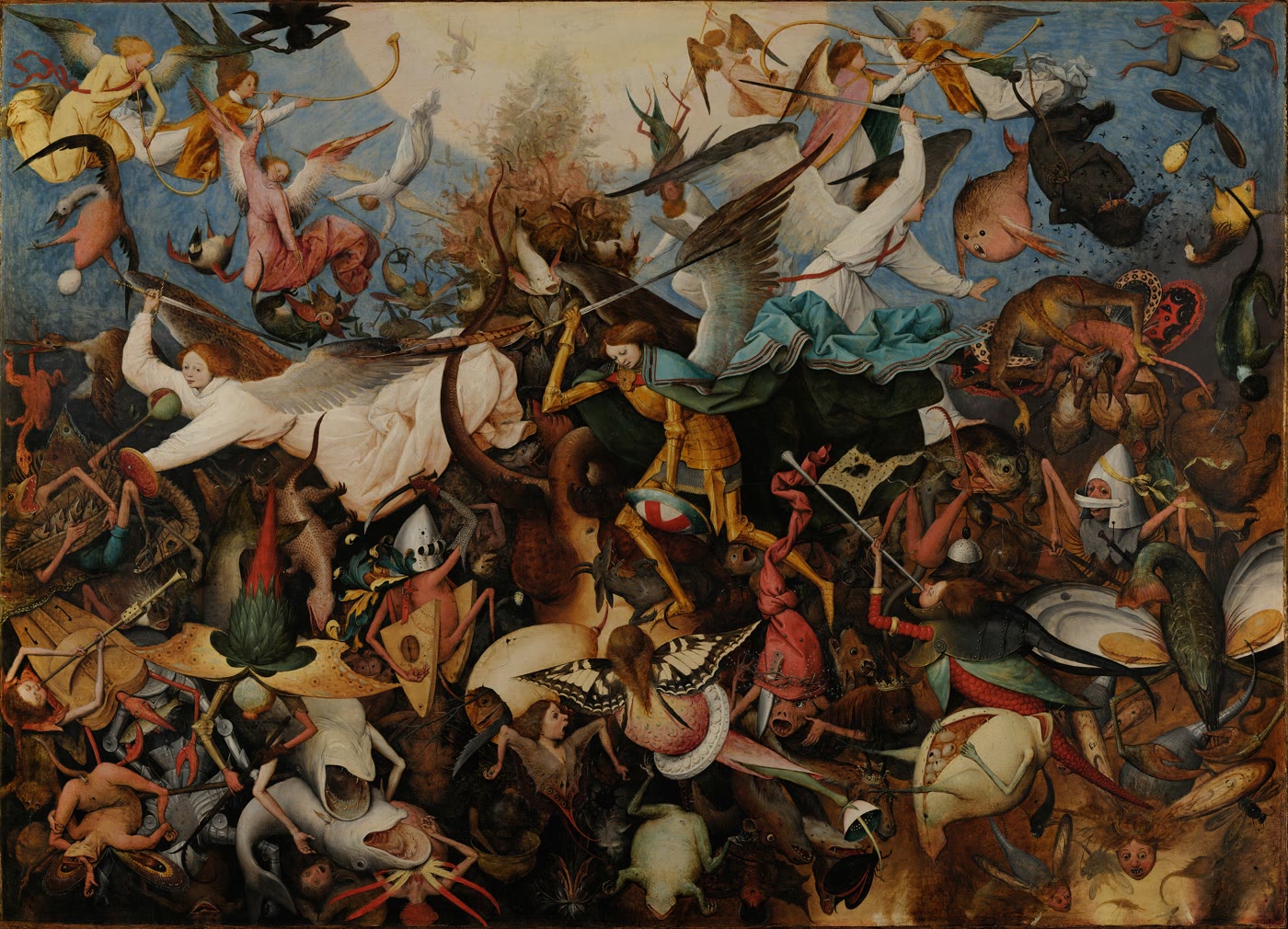
Even the map of punishment is assembled from parts. The Hebrew Bible's dead go to Sheol, the grave, righteous and wicked alike. Gehenna begins as a real valley — the Hinnom valley outside Jerusalem, where Jeremiah says children were burned at Tophet (Jeremiah 7:31) — and becomes a place of fiery judgment only in later apocalyptic writing. Second Peter 2:4 borrows the Greek prison of the Titans and says God cast the sinning angels into Tartarus. Hebrew grave, Jerusalem valley, Greek abyss: three geographies from three cultures, stacked into one hell by later readers.
One more piece of folklore deserves the same treatment, because it is preached as fact and cuts the other way. The claim that Gehenna was Jerusalem's perpetually burning garbage dump has no ancient source. Lloyd Bailey traced it in 1986 to the commentary of Rabbi David Kimhi, around 1200 CE — a medieval explanation repeated until it sounded like archaeology. Jerusalem did have a major first-century dump; Reich and Shukron excavated it in the Kidron valley, on the other side of the city, with no perpetual fire attached. The dump is real. The valley in the sermon is wrong.
The Arabian branch
Arabic Shaytan is the Hebrew word's own kin — one Semitic root, ś-ṭ-n, to oppose and accuse, carried into Arabic through the Aramaic-speaking Christian world. In the Quran, al-Shaytan, "the Satan," is a title, exactly as ha-satan was a title in Hebrew. His personal name is Iblis.
Where the name Iblis comes from is a philological argument with a leading candidate. Arthur Jeffery's Foreign Vocabulary of the Qur'an (1938), the standard catalogue, derives Iblis from the Greek diabolos — the word "devil" itself, worn down until the Greek shape is hard to see. That derivation is followed by most Western philologists. The classical Islamic position is different: al-Raghib and al-Tabari derive the name from the Arabic root b-l-s, "to despair" — Iblis as the one who despaired of mercy. And the route a Greek word would have traveled is itself unresolved: Jeffery ruled out Syriac mediation, and Mingana, Gabriel Said Reynolds (2004), and others have argued it back in. What can be said plainly: the leading Western derivation makes the Quran's devil carry the Greek title for devil as his personal name — a fossil of the long translation chain this article has been following — and the question is not closed.
The Quran's devil differs from the Bible's in two ways that are stated in the text itself.
First, Iblis is a jinn. Quran 18:50: "he was of the jinn" — kāna min al-jinn. Angels in the Quran do not disobey; Iblis could, because he is not an angel. He is a fire-being, and he says so: "I am better than he. You created me from fire and created him from clay" (7:12).
Second, his fall is a different story. In the Quran's telling — the cycle repeats in surahs 2, 7, 15, 17, 18, 20, and 38 — God commands the angels to bow before the newly made Adam. Iblis refuses, out of pride in his fire over Adam's clay. He is expelled, argues for and receives a respite until the Day of Judgment, and spends it misleading mankind. There is no throne he tried to seize, no war in heaven, no morning star. The sin is refusal, not revolt.
That story is older than the Quran in writing. It is the plot of the Life of Adam and Eve (composed somewhere between the 1st century BCE and the 3rd century CE), where Satan, asked why he fell, answers that he refused God's command to worship Adam — and in that text he even quotes Isaiah's boast about setting his throne above the stars. The Quran's account stands in that stream of Adam literature, not in Isaiah's.
The same refusal is read in opposite directions by the story's other heirs. The Yazidis' chief angel, Melek Taus, also refused to bow to Adam, and in Yazidi tradition the refusal is honored — loyalty to God's first command, to bow before none but God. The caution that belongs with this: Yazidi tradition is carried orally, in hymns called qewls, and the two "holy books" outsiders long quoted are judged modern fabrications in their framing (Mingana, 1916; Kreyenbroek, 1995). There is also a Yazidi strand in which the angel weeps for seven thousand years and his tears quench hell. And the loyalty reading of the refusal exists inside Islam itself, in the Sufi tradition that made Iblis a tragic monotheist (Peter Awn, Satan's Tragedy and Redemption, 1983). One refusal, three faiths, and no two verdicts alike. The centuries of slander that called the Yazidis devil-worshippers for it rest on a story their neighbors also tell.
What was added later
The devil most people can picture was finished in the centuries after the Bible closed.
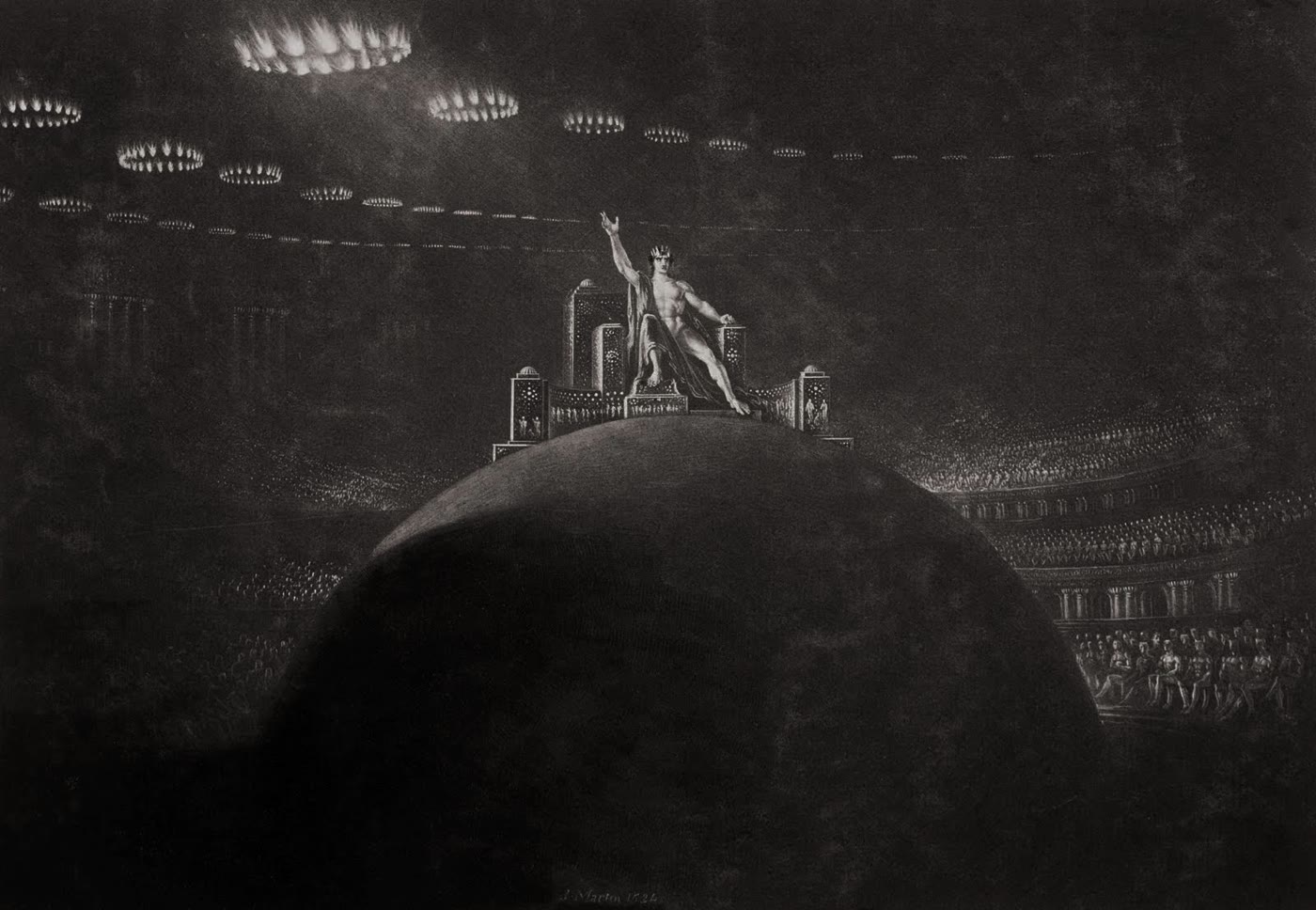
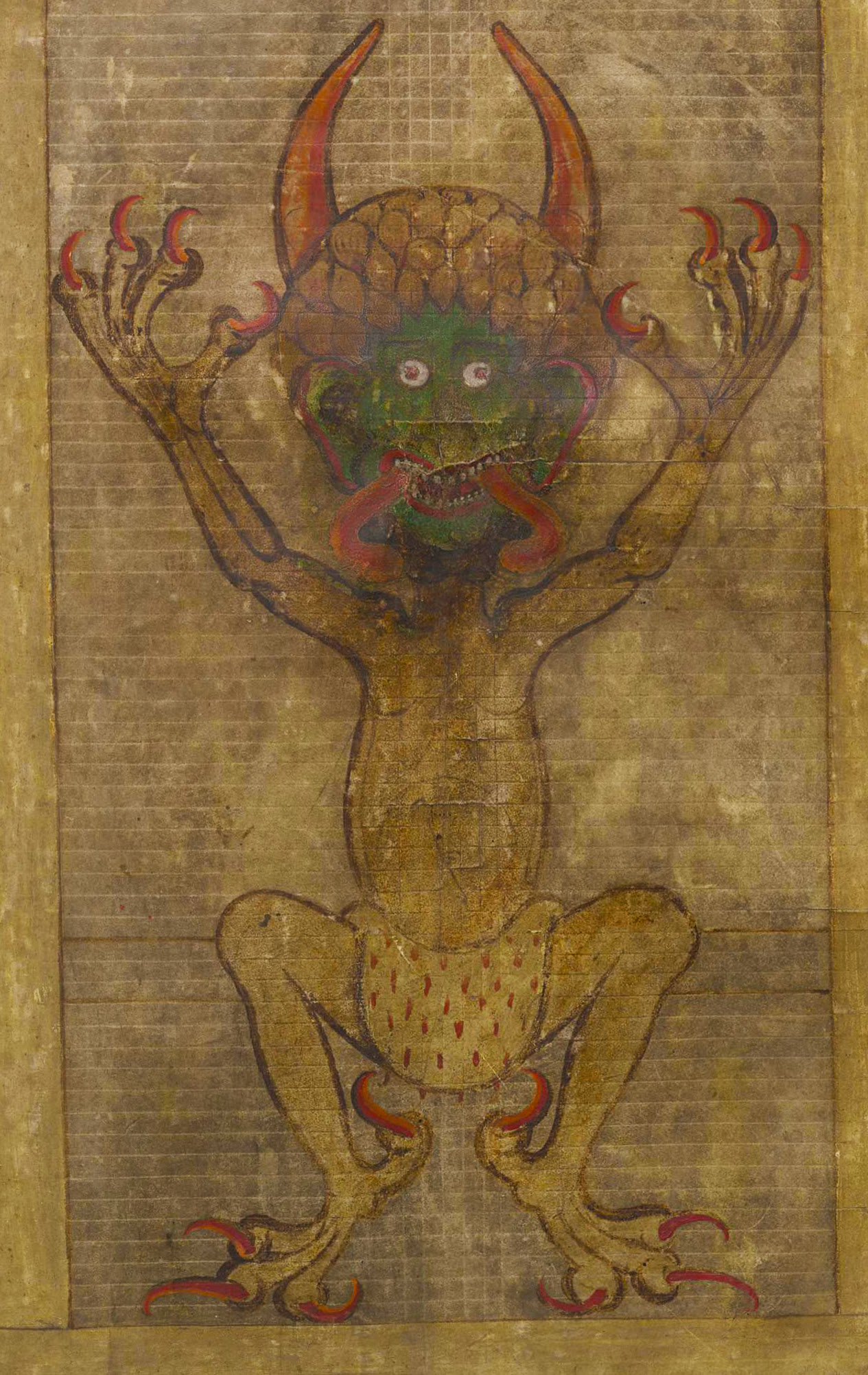
In the Bible, the devil does not rule hell. In Revelation 20:10 he is thrown into the lake of fire as a prisoner, to be tormented — not to run the place. The devil as hell's torturer-in-chief, pitchfork in hand, is medieval. Dante's Lucifer (Inferno 34, c. 1320) is stranger than the sermon version: a three-faced giant waist-deep in ice at the center of the earth, weeping from six eyes, chewing Judas, Brutus, and Cassius in his three mouths, in a hell that freezes rather than burns at its bottom. Milton's Paradise Lost (1667) supplied the personality and the biography — the war in heaven as an epic campaign, the council in Pandemonium, "better to reign in Hell than serve in Heaven." Most of what the modern world "knows" about Satan's character comes from a seventeenth-century poem. The horned, goat-legged figure of popular art was assembled across medieval art over centuries; the specific goat-headed idol called Baphomet, now treated as ancient, was drawn by Éliphas Lévi in 1856. The soul sold at a crossroads is folklore and blues legend. None of it is in the texts.
The short answer
Lucifer is a Latin word for the morning star, standing in one verse of a taunt against a human king, and attached to Satan by interpretation centuries later. No king bore the name, and no king list could carry it.
Satan begins as a Hebrew job title — the Accuser in God's council, working under orders — and grows across the Second Temple centuries into a named chief of evil. The growth is visible inside the Bible itself, in the space between Samuel and Chronicles.
Devil is the same office in Greek. Shaitan is the same word in Arabic. Iblis, by the leading derivation, is the Greek word "devil" worn into a name — and he is a jinn whose fall was a refusal, not a war.
The horned king of hell who fell from heaven in a war over God's throne, tempted Eve in the garden in person, and now tortures the damned is a composite: Hebrew court poetry, Second Temple apocalypse, a Persian demon or two, Greek translation choices, one chapter of Revelation, medieval art, Dante's ice, and Milton's epic. Every seam is documented, and every source named below can be opened and checked.
Sources and Receipts
Isaiah 14:4, 10–16, 19–20 (ESV/JPS); Hebrew Helel ben Shahar, 14:12. Target unnamed in the chapter.
Sargon II case: S.Z. Aster, Reflections of Empire in Isaiah 1–39 (SBL, 2017); S.L. Cook, "Isaiah 14: The Birth of a Zombie Apocalypse?," Interpretation 73/2 (2019), pp. 130–142. Layered dating: Berges; Sweeney; Tiemeyer.
Shahar and Shalim: KTU 1.23. Athtar on Zaphon: KTU 1.6. Dissent: K. Spronk, "Down with Hêlèl!" in Und Mose schrieb dieses Lied auf, AOAT 250 (1998); M. Albani, in C. Auffarth & L. Stuckenbruck (eds.), The Fall of the Angels (Brill, 2004), pp. 61–86; N. Wyatt, Religious Texts from Ugarit (1998).
Vulgate Isaiah 14:12 (lucifer); Vulgate 2 Peter 1:19; Revelation 22:16. Exsultet: lucifer matutinus... qui nescit occasum. Lucifer of Cagliari, d. 370/371: Encyclopædia Britannica (1911), local Sardinian veneration, no formal canonization.
The fusion's early witnesses: Life of Adam and Eve 15 (Satan quoting Isaiah's boast); 2 Enoch 29 (interpolation suspected, Charlesworth); Tertullian; Origen's systematization; Jerome and Theodoret conceding the plain sense.
Job 1–2; Zechariah 3; Numbers 22:22 (the angel "as a satan").
2 Samuel 24:1 vs 1 Chronicles 21:1. Dispute: S. Japhet, I & II Chronicles (OTL, 1993); P.L. Day, An Adversary in Heaven (HSM 43, 1988); G.N. Knoppers, I Chronicles 1–9 (Anchor Bible, 2004); contra H.G.M. Williamson (1982); middle: P.B. Evans, Biblica 85 (2004).
1 Enoch, Book of the Watchers (Qumran Aramaic fragments); Jubilees on Mastema; Community Rule (1QS) Treatise on the Two Spirits; War Scroll on Belial.
Persian question: M. Boyce; J. Barr, "The Question of Religious Influence: The Case of Zoroastrianism, Judaism, and Christianity," JAAR 53 (1985); S. Shaked. Asmodeus < Aeshma: Encyclopædia Iranica, "Asmodeus"; compound aēšma.daēva reconstructed, cf. Middle Persian Xēšm Dēw.
Leviticus 16 (Azazel); 2 Kings 1 (Baal-zebub); Matthew 12:24 (Beelzeboul, prince of demons); Deuteronomy 32:17 (shedim); Isaiah 34:14 (Lilith); Alphabet of Ben Sira for Lilith as first wife.
Septuagint diabolos for ha-satan; "devil" < Latin diabolus < Greek diabolos (etymological dictionaries).
Wisdom of Solomon 2:24; Cain reading: Wisdom 10:3; 1 Clement 4; M.E. Stone on the serpent identification. Revelation 12:9, 12:7–9, 20:2, 20:10. 2 Peter 2:4 (Tartarus). Jeremiah 7:31 (Tophet).
Gehenna dump: L.R. Bailey, "Gehenna: The Topography of Hell," Biblical Archaeologist 49/3 (1986), tracing the claim to David Kimhi, c. 1200 CE; G.R. Beasley-Murray (1986). Kidron dump: Reich & Shukron (2003); Bar-Oz et al., Levant 39 (2007).
Quran 18:50 (Iblis of the jinn); 7:12 (fire and clay); the bow-refusal cycle: surahs 2, 7, 15, 17, 18, 20, 38. Iblis etymology: A. Jeffery, The Foreign Vocabulary of the Qur'an (1938), pp. 47–49 (diabolos; Syriac route rejected by Jeffery); classical b-l-s derivation: al-Raghib; al-Tabari; Syriac route argued: Mingana; G.S. Reynolds (2004); survey: Monferrer-Sala, Studia Orientalia 112 (2012).
Life of Adam and Eve 12–16 (refusal to worship Adam; Vita 14:3, 15:3), composition c. 1st century BCE–3rd century CE.
Melek Taus and the qewl tradition: P.G. Kreyenbroek, Yezidism — Its Background, Observances and Textual Tradition (1995); Mingana, JRAS (1916) on the "holy books." Sufi Iblis: P.J. Awn, Satan's Tragedy and Redemption (Brill, 1983).
Dante, Inferno 34 (Lucifer in ice). Milton, Paradise Lost (1667). Baphomet: Éliphas Lévi, Dogme et Rituel de la Haute Magie (1856).
More antiquities research: Antiquities Research